

Best Siphon for Pumping Water, Gas, & More

Water and fuel aren’t any good to you if you can’t get to them. With larger containers, like 55-gallon drums or fuel tanks, that can be a difficult task. A siphon pump can make it easy. Whether you have to pump, prime, or even shake it, the best siphon pump is the one you have on hand that reliably gets the job done. There are many types of siphons and pumps to pick from.
This is where we come in. We’ve researched the best siphons, put them to the test, and now the results are in: the overall best, a self-priming option, and a drum option. If you want to quickly transfer some liquids, one of our picks will help you stay fluid.
Contents (Jump to a Section)
In this latest update of the best siphons, pricing has been adjusted. When you buy through our links, we may earn a commission. Disclosure»

Best Siphon
Pennzoil Multi-Use Pump
Versatile, Proven, and Effective
If you are moving liquid or air around, this multi-use pump can help in an endless variety of scenarios.
*Price at time of publishing; check for price changes or sales.
Move water out of a drum, fill a car’s fuel tank, inflate a bike tire, and fill your kid’s favorite kickball- all in the same day with one tool. This Pennzoil pump can tackle pretty much anything. It’s not the best at each individual task, but it can handle so many different tasks for its low cost.
Specifications
- Includes multi-use pump, intake hose, output hose, air hose, and three air nozzles
- 0.5″ hose quick connects
- 9″ x 3″ pump
- 1.25 pounds
The pump is difficult to clean completely, but it is heavily advised that you do so you don’t mix applications. Pumping air with liquid in the system isn’t ideal. Siphoning drinking water with residual gasoline in the pump is worse. It may even be easier to avoid mixed-use situations until they are absolutely necessary.
With plenty of versatility and reliable quality, it’s easy to see why the Pennzoil Multi-Use Pump is the best.


Mobile Siphon
Horsudy Shaker Siphon
Simple, Versatile, and Compact
A tried and true ‘jiggler’ can get any job done with just a little know-how despite its simple setup.
*Price at time of publishing; check for price changes or sales.
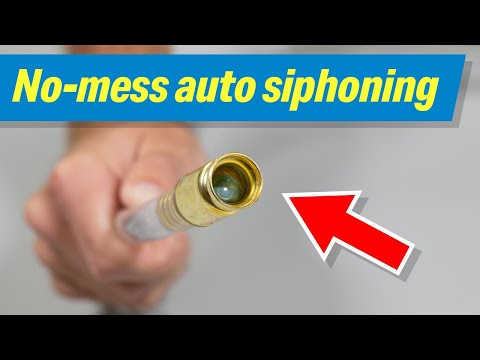
The best solution for mobile kits and one of the least-hassle solutions, once you figure out the ‘jiggle’ method, this shaker siphon makes moving liquids easy. The inside of the brass primer tip contains an ‘industrial grade’ glass ball (which looks just like a marble) nested in a spring. This is what creates the vacuum when you jiggle the brass primer when it is submerged in water.
Specifications
- 0.5″ diameter hose
- 6 feet long
- 3.5 gal/min high flow rate
- Anti-static copper primer
- 13.8″ H x 11″ W x 14.3″ L
- 9.6 ounces
One downside to a shaker-type siphon is that the primer has to be submerged in the transfer liquid. This means it would be tough to use to transfer gasoline or diesel out of a vehicle, because the primer is simply too wide a diameter. You can modify other siphon types to get gas out of vehicles, but not jigglers.
If you are looking for an inexpensive and simple siphon hose, a Horusdy Shaker Siphon is what you need.


Best Drum Pump
Tera Pump TRDRUM40
Powerful, Proven, and Effective
Get the drum flowing with this bunghole attaching pump that will let you easily access your water reserves.
*Price at time of publishing; check for price changes or sales.
Tera Pump gets the drum pump right with this inexpensive but reliable option. It has a high flow rate and an easy-to-use pump handle to prime the siphon tap. Directing the flow is easy, and controlling it is just a button away with the pump handle venting. Don’t rely on electricity for your emergency situations, get the best manual drum pump on the market.
Specifications
- Adjustable tap length up to 34″ for 55-gallon drums and smaller
- 47″ corrugated flexible discharge hose
- 2″ bung adapter
- 5.5 gal/min high flow rate
- 17″ H x 6″ W x 3″ L collapsed
- 1 pound
If you are looking for a reliable high-flow drum pump, get a Tera Pump TRDRUM40 for your water storage barrels.
Comparison Table
| Siphon | Recommendation | Price* | Type | Reach | Best Feature |
|---|---|---|---|---|---|
| Pennzoil Multi-Use Pump | Best Overall | $17 | Pump | 48″ | Immense versatility |
| Horusdy Shaker Siphon | Best for Portability | $10 | Jiggler | 36″ | Lightweight & compact |
| Tera Pump TRDRUM40 | Best for Tapping Drums | $40 | Pump | 34″ | Bung seal |
| H-veenjor Gasoline Siphon | $8 | Bulb | 31″ | Price | |
| The Original Safety Siphon | $15 | Jiggler | 36″ | Lightweight & compact | |
| Best Siphon 1/2″ 6 Foot | $20 | Jiggler | 36″ | Lightweight & compact | |
| GasTapper Fuel Transfer Pump | $34 | Bulb | 36″ | Smaller suction nozzle | |
| GasTapper Deluxe Siphon Pump | $40 | Bulb/Jiggler | 48″ | High Quality |
The Siphons We Compared
Our research narrowed the field down to several brands and types of siphons and pumps that we compared: Hopkins, Tera Pump, Pennzoil, ULine, FloTool, Hyper Tough, and more.
You can see our full list of review criteria below in the What to Look For section, with an explanation for each.
We considered a wide range of siphons but ended up comparing the more compact manual ones. There are situations where powered siphons make sense, especially if you can power them in an emergency. But for the sake of simplicity and cost, we focused on the siphons that required manual priming- whether through a pump, bulb, or other siphon method.
We’re always looking for new and better gear, so if you have a siphon that you swear by, let us know in the comments. We review most of our tested gear annually so we can try to get it in the next roundup and see if it will beat out our top picks.
Why Trust TruePrepper
Hi, I’m Sean Gold, and as a prepper, I’ve been storing water and fuel as part of my preparedness plan for over a decade. I use siphons regularly to transfer and cycle liquids and to prep and clean containers.
As a manufacturing engineer, I also have a keen eye for component quality. Finding the best value and cutting through marketing and inflated margins is a challenge I love taking on.
What to Look For
The best siphons have several important features to look for:
- Value
- Siphon Method
- Flow Rate
- Size & Weight
- Quality
When you get the right blend of these, you can find a siphon or a pump that you can rely on to transfer any liquid. Below, we break down what each of these features means for the siphons that truly set themselves apart.
Value: Cost vs. Benefit
The amount of money you spend on something like a siphon hose or pump shouldn’t blow out your entire budget. When it comes down to it, any hose will work- the added cost comes in the form of priming, pumping, and safety.
You never want to spend too much money on one thing when it comes to tools. It’s better to diversify your spending and budget to make sure you are covered for a wide range of scenarios.
Siphon Method
There are a lot of ways to move liquids between containers, whether it is siphoned or pumped. A few of the more common siphon methods include:
- Compression Pump – An in-line handled pump (like a bike pump) that forces the liquid to move through the chamber, starting and continuing the flow.
- Bulp Pump – An in-line bulb that, when compressed, creates a vacuum to pull the liquid through the hose.
- Shake Siphon – A fitting is on the end of the hose that you put into the liquid you want to move. When you move the fitting up and down, the shape of it creates a vacuum in the hose, which draws the liquid through. Also called a jiggle siphon.
- Gravity – Position the source container above the receiving container and use a dropping motion and gravity to prime the siphon.
- Your Mouth – Plenty of people have siphoned gas and water using their mouths for suction. Not the best idea, but a way to move liquid if you need to.
Safety Tip: Using your mouth to siphon gas and other fuels can easily cause gas poisoning, as well as have serious long-term effects.
Flow Rate
Flow rates in manual siphons are just a factor of tube diameter- gravity is your pump, and it has a constant acceleration. If you are powering an actual pump, you may get some higher flow rates through a 1/2″ tube.

Size & Weight
Size, weight, and practicality ruled out the powered siphon pumps for us, but size and weight are also big considerations for manual siphons.
You don’t want a bulky pump bogging you down or taking up a lot of space in mobile kits, so our auto siphon pick fits the bill here best.
Quality
Leaks, dry rot, and degrading plastic are all things you don’t want to contend with when you are siphoning something like gas. Skip all of this by getting quality equipment that is meant to be used for a variety of fuels, water, and other liquids.
Corrosive liquids can limit hose and bulb life, especially. Those same parts can have difficulty lasting in more extreme temperatures, too.
You don’t want to get the cheapest shaker siphon that has been known to have the fitting fall off- get the one with proven quality and reviews to back it up.
How to Use a Siphon
With the right tools for the job (and the right length of hose), siphoning is pretty easy. Here are the basic steps, regardless of equipment:
- Position containers – place the containers so that the one you are feeding from is higher than the receiving container. For example, if you are moving gas from a gas can into a car, you can put the full gas can in a stable spot on the roof to gravity siphon. Other siphon methods will create a vacuum for you if you aren’t using gravity to prime the siphon.
- Clear the tube – make sure the siphon tube(s) are clear of debris. Blow it out and unwind it, making sure it’s not kinked if it was coiled up.
- Prime the siphon – Put the end of the siphon tube in the container and prime it with a gravity drop, pump, or shake.
- Watch the flow – Control the flow rate by raising or lowering the receiving container or collapsing the siphon hose.
- Stop the siphon – Break the flow of liquid by kinking the hose or pulling the siphon end out. If you are gravity siphoning, you can also raise the receiving container above the source to stop the siphon.
Here is a good visual of auto-siphoning and a bit of physics on how it works.
Siphoning Vehicles
Unfortunately, many siphons and pumps won’t work to retrieve fuel from modern vehicles. Many times, people go under the car to the fuel lines or directly to the top of the fuel tank, because siphoning is difficult. There are two main obstacles for most vehicles built after the 90s: the anti-siphon ball and the capless filler tube doors. To get around these, you’ll need three/four things:
- Small, rigid funnel
- Large diameter tubing
- 1/4″ fuel line hose (modified and/or lubricated)
- 1/4″ adapter barb for siphon/pump
The filler tube doors can close on hoses, causing them to collapse and trapping them inside (kind of like a Chinese finger trap). When you pull on the hose to get it out, it binds against the metal flap, causing it to become even more stuck. The workaround for the tube flap in the fill neck is simple: a funnel. The opening of the funnel does need to be large enough to feed a large-diameter (1/2″ OD) tube inside.
When you are past the metal door flap, you’ll need to feed the larger diameter tube through the funnel opening down towards the tank. If the vehicle has any sort of anti-siphon cross or ball mechanism, the hose will hit it and stop before it reaches the fuel.
Next, feed the fuel line hose into the larger diameter tubing. To make it easier to get around the anti-siphon, you can pre-cut the end at an angle. You can also lubricate it with WD-40. If it stops or binds at the anti-siphon, twist the hose to spin the point to get around it. Once you feel it get around the stoppage, you can continue to feed it through until it reaches fuel.
From there, you can attach the adapter barb to the fuel line hose and your siphon pump and proceed as you normally would.
Common Sense Warning: Don’t siphon gasoline out of vehicles that you do not own without the owner’s permission.

This workaround gives you the stiffness to get through the flap and down the filler tube, but the fuel line diameter to get through the anti-siphon in most vehicles.
This nested-hose catheter-style way of bypassing the modern anti-siphon in newer vehicles was brought to our attention from the powered GasTapper, which works similarly but requires power and costs the better part of $100.
Who Needs a Siphon?
A siphon isn’t really a necessity unless you have emergency water storage containers or just drive a fuel-powered car. The ability to transfer liquids at any given time is worth the low cost of investing in a siphon.
We consider a quality siphon essential for these survival kits:
We suggest you consider a siphon for these kits, based on your specific situation:
Siphons are always useful, and our suggestions can come in handy for a variety of tasks around the house.
Sources & References
All of our experience and the testing we do to determine the best siphons are useless without listing our research sources and references. We leaned on these for the book knowledge that we paired with our hands-on testing and practical survival experience:
Jean, J. (1996). Pumping testing using a siphon well. Water Resources Management. Volume 10. Pages 81 – 105. (Source)
Potter, A., et al. (1971). The Siphon. Physics Education. Volume 6. Issue 5. Page 362. (Source)
Yenphayab, C. (2019). Study the engineering aspect of an advance siphon pump for a small farm irrigation. IOP Conference Series: Earth and Environmental Science. Volume 301. (Source)
Conclusion
Water and fuel aren’t any good to you if you can’t get to them. With larger containers, like 55-gallon drums or fuel tanks, that can be a difficult task. Use a siphon to manage your fuel and water containers and get to your resources when you need them.
Here are a few other guides and reviews our subscribers have found helpful:
- Best Gas Cans for Prepping and Survival
- Best Rain Barrel for Prepping and Emergency Water Storage
- Home Survival Kit List | 53 Essentials
See more of our expert-written guides, resources, and reviews in your search results – add TruePrepper as a preferred source.
Prepping Your Way
No judgement and no imperatives. Prepare the way you want to with the trusted source millions of modern preppers have relied on.Our newsletter fires out every Monday where you can expect:
- Practical prepping guides and tips
- Thorough survival gear reviews
- Noticeably absent spam and popups
- < 0.4% of people unsubscribe

I have the “Shaker Siphon” it does NOT fit into the “Unleaded/Ethanol” smaller car/truck gas tank openings. I confronted the manufacture a while back & they said, “They do Not want to encourage stealing unleaded gas out of vehicles”. My comment is, what about me wanting to transfer (from reserve gas cans) my own bought unleaded gas into My Vehicle!